
Choosing the wrong compressor model doesn't just inflate your monthly utility bill. It affects production reliability, air quality compliance, and the maintenance burden on your entire system. An oversized unit cycles itself into early failure. An undersized one runs at maximum pressure around the clock.
This guide walks through what energy efficiency actually means in air compressors, the main technology types, and six selection factors that connect technical specifications to measurable operational outcomes.
Key Takeaways
- Energy costs represent 76% of a compressor's total lifetime cost - efficiency matters far more than the purchase price
- Variable speed drive (VSD) technology and correct system sizing deliver the highest energy savings for facilities with variable demand
- Oil-free technology is mandatory for pharmaceutical, food, medical, and semiconductor applications
- Smart monitoring and remote diagnostics enable predictive maintenance and prevent costly unplanned downtime
- Evaluate total cost of ownership (TCO), not upfront price
What Are Energy-Efficient Air Compressors?
An energy-efficient air compressor is one engineered to deliver the required volume of compressed air at the lowest possible energy input. The standard performance metric is specific power - measured in kW per 100 CFM - which allows direct comparisons between models at equivalent pressures and load conditions. Understanding where each technology fits helps narrow the field before you start comparing specs.
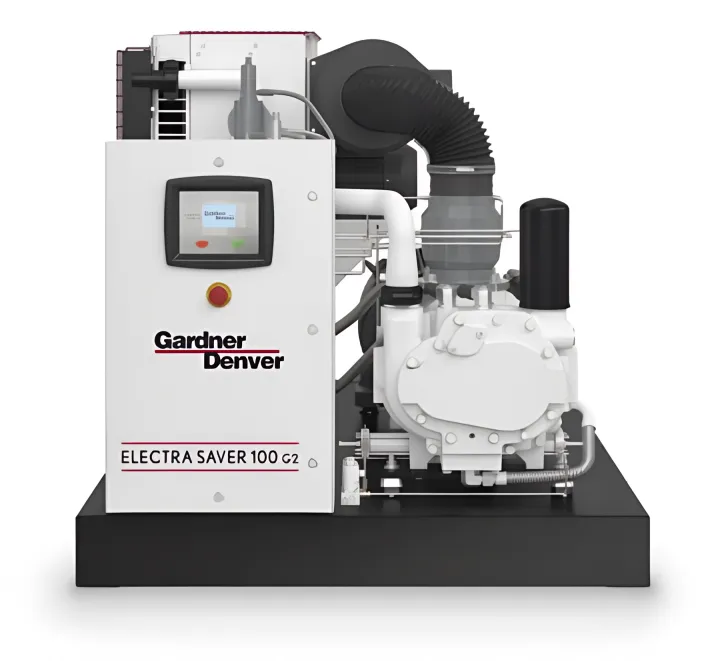
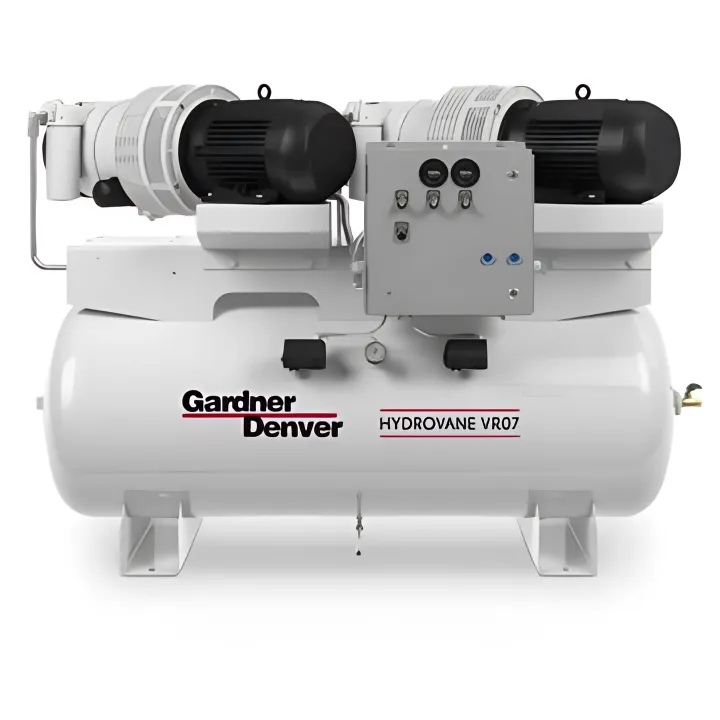
The Main Technology Categories
Three technology families cover the majority of industrial applications:
- Fixed-speed rotary screw compressors - reliable workhorses for steady, predictable air demand; run at full load continuously
- Variable speed drive (VSD) rotary screw compressors - modulate motor speed in real time to match fluctuating demand, cutting energy waste during partial-load periods
- Oil-free compressors (scroll, two-stage rotary screw, centrifugal) - required for contamination-sensitive applications; two-stage designs achieve higher pressure ratios at lower energy cost than single-stage equivalents

Within VSD technology, permanent magnet motor variants push efficiency further. Advanced motor designs can reduce partial-load energy draw by 5–15% compared to standard induction motors - a real difference for facilities running multiple shifts or extended production schedules.
Why Industrial Facilities Prioritize Efficiency
The operational case is straightforward:
- Reduced electricity costs as a direct percentage of production overhead
- Lower carbon emissions supporting ESG and sustainability reporting requirements
- Less heat generation, which extends bearing and component life
- Compliance with air quality standards in regulated industries (pharmaceutical, food, healthcare, semiconductor)
- Fewer maintenance events due to optimized run cycles and reduced mechanical stress
What to Consider When Choosing an Energy-Efficient Air Compressor
The right compressor depends on your demand profile, application sensitivity, facility infrastructure, and long-term operational goals. The six factors below move buyers past horsepower ratings and price comparisons toward decisions grounded in measurable outcomes.
1. Drive Technology: Fixed-Speed vs. VSD vs. Permanent Magnet
Drive technology determines how efficiently a compressor handles real-world demand variation - and it's where most facilities find their largest savings opportunity.
A fixed-speed compressor runs at full load regardless of actual demand. When air requirements drop - which happens during shift changes, production lulls, or weekend operations - the motor keeps running at full draw, wasting energy proportional to that unmet capacity. A VSD compressor continuously adjusts motor speed to match real-time demand, eliminating that waste.
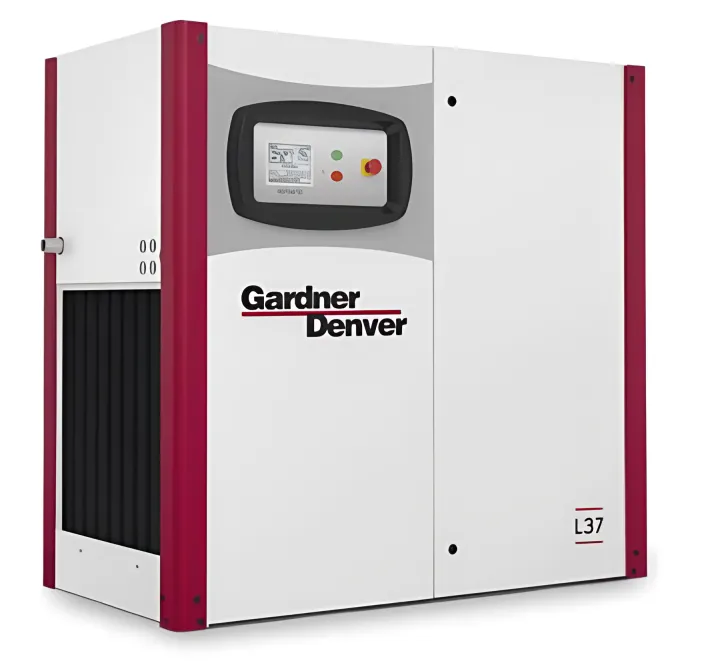
Gardner Denver's LRS Series VSD rotary screw compressors, available through Comp-Air Ohio, are documented to deliver 30–50% energy savings compared to equivalent fixed-speed operation by precisely matching output to demand.
A CAGI VSD case study confirms this in practice: a plant replaced an oversized 50 HP fixed-speed unit with a 15 HP VSD compressor to serve a 22–45 CFM variable load, achieving documented payback.
KPIs this factor directly influences:
- kWh consumed per unit of compressed air produced (specific power)
- Annual electricity spend
- Carbon emissions per production cycle
Permanent magnet motor technology within VSD designs offers additional efficiency at partial loads and warrants evaluation for high-utilization applications running multiple shifts daily.
2. Correct Sizing: Matching CFM Capacity to Actual Demand
An oversized compressor doesn't just waste energy - it destroys itself. Rapid cycling (starting and stopping at low load) accelerates wear on motors, bearings, and valves, often leading to premature failure within months of commissioning. Undersizing forces continuous maximum-pressure operation, with similar results.
The only reliable path to correct sizing is a compressed air demand audit that measures:
- Peak CFM requirements
- Average load profile across all operating shifts
- Current pressure band and end-use pressure requirements
- Unregulated uses (leaks, open blowing) that inflate apparent demand

DOE data shows that unregulated uses commonly account for 30–50% of total plant air demand. Audits routinely reveal that the installed compressor is serving artificial demand - not real production requirements.
Comp-Air Ohio offers compressed air audits as part of their service portfolio, helping Northern Ohio facilities establish actual baseline demand before recommending equipment.
One number to remember: every 2 PSI increase in discharge pressure adds approximately 1% to compressor energy consumption. Pressure is not free.
3. Operating Pressure and Header Pressure Optimization
A common misconception: raising system pressure improves airflow at remote use points. It doesn't. Higher header pressure actually increases leak rates and energy consumption while providing no additional usable flow at the end of the line. Leaks alone waste 20–30% of total compressor output in a typical industrial facility - and that waste rate increases with pressure.
The correct strategy:
- Set header pressure to the minimum required by your highest-demand application
- Regulate down for lower-pressure uses at the point of use
- Fix leaks before raising pressure to compensate for them
Audits regularly uncover pressure-drop, leak, storage, and control issues that enable lower header pressure settings. Verify with point-of-use measurements before changing setpoints - but even modest reductions compound into meaningful annual savings given the 2 PSI / 1% energy relationship.
KPIs this factor influences: system-wide CFM consistency, energy per shift, leak severity and frequency, equipment damage risk.
4. Air Quality and Purity Standards
For pharmaceutical, food and beverage, semiconductor, healthcare, and laboratory applications, air purity is a non-negotiable selection filter - not an upgrade option.
Oil-injected compressors introduce hydrocarbon contamination risk into the compressed air supply. In sensitive applications, even trace oil carryover can cause product contamination, failed compliance audits, production shutdowns, and - in pharmaceutical contexts - serious regulatory consequences.
ISO 8573-1:2010 defines compressed air purity classes for particles, water, and oil. Match your required purity class to the compressor technology before evaluating any other specification.
Practical selection framework:
| Application Type | Compressor Technology | Why |
|---|---|---|
| General industrial | Oil-injected rotary screw | Cost-effective, no purity requirement |
| Food processing | Oil-free required | 21 CFR Part 117 contamination prevention |
| Pharmaceutical/biotech | Oil-free, ISO 8573-1 Class 0 | GMP compliance, validation requirements |
| Medical/dental | Oil-free, NFPA 99 compliant | Patient safety, regulatory mandate |
| Semiconductor/electronics | Oil-free, Class 0 | Zero contamination tolerance |

Gardner Denver's EnviroAire Series, available through Comp-Air Ohio, delivers ISO 8573-1 Class 0 certified oil-free air - independently verified to contain zero oil in aerosol, liquid, and vapor form. The EnviroAire S & ES scroll compressor models carry NFPA 99 compliance for medical air applications. These are independently verified certifications, not marketing claims.
Modern scroll and two-stage rotary screw designs run at 100% duty cycle and eliminate downstream costs for oil/water separators and filtration consumables - no performance compromise required.
5. Smart Controls, Monitoring, and System Integration
A compressor that generates performance data but can't act on it - or share it with facility management systems - delivers a fraction of its potential efficiency and uptime value.
Modern controls deliver three concrete operational benefits:
- Automated pressure optimization - maintaining the tightest possible pressure band without manual intervention
- Multi-unit sequencing - coordinating multiple compressors to run at peak efficiency rather than fighting each other
- Predictive maintenance alerts - catching developing faults before they become unplanned shutdowns
Unplanned downtime is the costliest compressed air failure mode. A production line that stops because a compressor failed without warning generates losses that no energy savings program can recover quickly.
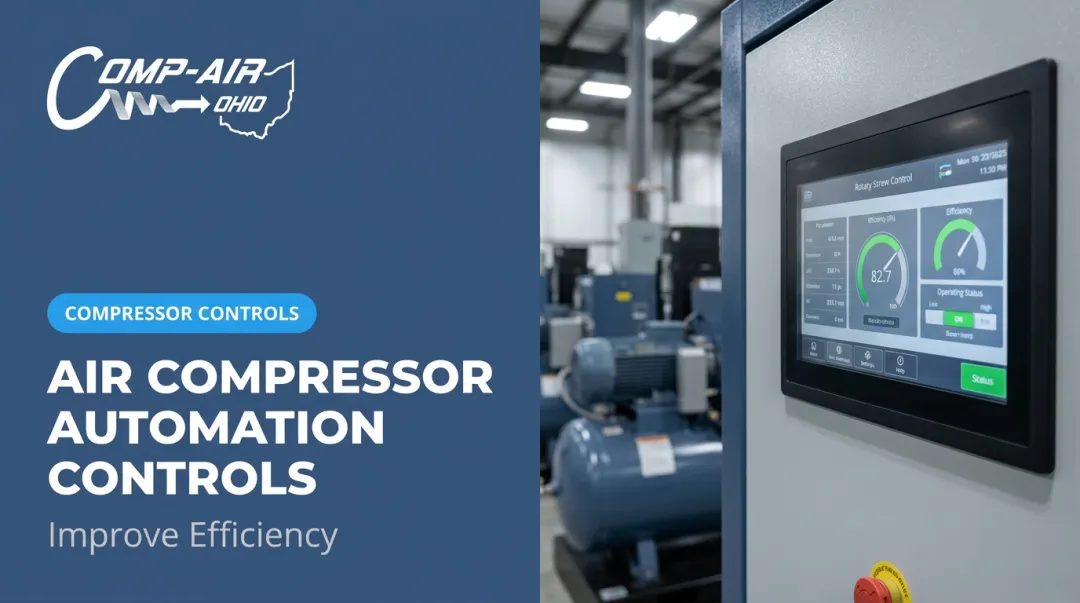
Gardner Denver's Governor touchscreen controller supports sequencing for up to four compressors and includes built-in iConn remote monitoring connectivity as standard equipment on select models. The iConn platform provides 24/7 remote visibility into real-time KPIs, performance trends, and operating data - accessible through a web portal without requiring an on-site visit. For 24/7 production environments, this capability shifts maintenance from reactive to proactive.

6. Total Cost of Ownership: Evaluating Energy ROI Over the Compressor's Lifespan
Purchase price is the least useful metric for compressor selection. With electricity representing 76% of 10-year total cost, the efficiency gap between a standard fixed-speed unit and a high-efficiency VSD model compounds with every operating hour.
Simple TCO evaluation framework:
- Calculate annual energy cost: Compressor kW × operating hours per year × local $/kWh rate
- Compare specific power across candidates: Use CAGI data sheets showing kW/100 CFM at your required pressure
- Factor maintenance and warranty: Contract costs, parts availability, warranty terms
- Calculate the efficiency delta: Multiply annual energy cost difference by 10 years

The result will typically show that a high-efficiency model with a $15,000–$25,000 premium over a standard unit pays back in 2–4 years - and saves significantly more over the remaining service life.
When you run the numbers, the efficiency premium pays for itself. The question isn't whether a high-efficiency model saves money - it's how quickly.
How Comp-Air Ohio Can Help You Choose the Right Model
Comp-Air Ohio has been Northern Ohio's authorized Gardner Denver distributor since 1977, backed by Gardner Denver's engineering history dating to 1859. Their focus is helping industrial buyers select and implement compressed air systems that match actual operational demands, compliance requirements, and efficiency targets.
Key Gardner Denver technology differentiators available through Comp-Air Ohio:
- 18–58% energy efficiency improvement from the patent-pending large-capacity heat exchanger in the X Series Large Refrigerated Dryers
- GD RotorArmor coating: chemical and mechanical bond to rotors and housing that maintains airend efficiency throughout the compressor's service life - unlike competing two-part coatings that degrade and lose 10%+ performance over time
- Hydrovane rotary vane technology: rated for 100,000+ operating hours without airend replacement under proper maintenance schedules - one of the lowest total cost-of-ownership profiles in rotary vane technology
- Platinum 10-Year Extended Warranty: covers airend parts for 10 years and major components for 5 years; the standard warranty covers 1 year
Beyond the equipment itself, Comp-Air Ohio provides the full infrastructure and support needed to deploy and sustain a compressed air system:
- 100% oil-free air via EnviroAire Series (ISO 8573-1 Class 0, NFPA 99 compliant for medical applications)
- Governor touchscreen controller with iConn remote monitoring for real-time diagnostics and predictive maintenance
- Full compressor range from 2 HP to 500 HP across fixed-speed and VSD models
- Complete system solutions including refrigerated and desiccant dryers, filters, and aluminum piping
- Compressed air audits to establish actual demand baselines before equipment selection
- 24/7 emergency service for contract customers across the Cleveland and Akron areas
- ISO 9001 certified, ASME certified, licensed refrigeration technicians on staff
Conclusion
Choosing the right energy-efficient compressor comes down to matching the machine to your operation - not chasing the lowest price or highest horsepower. The six factors covered here provide a structured path from production requirements to a defensible purchase decision:
- Drive technology (fixed-speed vs. VSD)
- Sizing based on actual demand, not peak estimates
- Operating pressure matched to application requirements
- Air quality and purity class for your processes
- Smart controls for monitoring and load optimization
- Total cost of ownership over the full equipment lifecycle
Compressor selection is also not a one-time event. System demand changes, equipment ages, and energy costs fluctuate. Periodic performance audits - paired with a service partner who knows your system - keep efficiency from eroding over time. Comp-Air Ohio offers preventative maintenance contracts and 24/7 emergency service for contract customers throughout Northern Ohio.
If you're in Northern Ohio and want to assess your current compressed air system or evaluate new equipment, contact Comp-Air Ohio for a system assessment. A properly sized, correctly specified compressor pays back its efficiency premium through lower energy costs for years after installation.
How Comp-Air Ohio Delivers for Your Plant
Comp-Air Ohio is the Gardner Denver air compressor dealer for Northeast Ohio, serving manufacturing plants, automotive shops, processing facilities, and commercial businesses from 9841 York-Theta Drive in North Royalton since 1977. Your Cleveland, Akron, and Northern Ohio facility gets local sales, service, repair, maintenance, parts, compressed air audits, and electric rentals up to 300 HP, plus all-makes repair when uptime matters.
Explore related resources on our compressors, parts, dryers, aluminum piping, lubricants, compressor controls, nitrogen generators, and used equipment pages.
Ready for next steps? Request a quote, call Cleveland at (440) 237-6700, Akron at (330) 928-3092, or toll-free at (800) 247-7978.
Frequently Asked Questions
What is the most energy-efficient air compressor?
Variable speed drive (VSD) rotary screw compressors are the most energy-efficient choice for facilities with fluctuating air demand, continuously adjusting motor speed to match real-time output requirements. For high-pressure applications, two-stage compression adds further efficiency gains. The best answer for your facility starts with measuring your actual load profile.
Are oilless air compressors any good?
Yes - modern oil-free compressors are the required choice for pharmaceutical, food and beverage, medical, and semiconductor applications where contamination is unacceptable. Gardner Denver's EnviroAire and PureAir Series have closed the performance gap with oil-injected models, with ISO 8573-1 Class 0 certification available.
Are any air compressors made in the USA?
Yes. Gardner Denver was founded in 1859 and has manufactured industrial compressors for over 160 years, making it one of the longest-standing American names in the industry.
How much energy does an air compressor use?
Compressed air typically accounts for around 10% of total industrial electricity consumption according to DOE, and can exceed 30% in some facilities. Actual energy use depends on compressor size, operating hours, pressure setpoint, leaks, and system efficiency - and energy represents 76% of a compressor's total 10-year ownership cost.
What is variable speed drive technology in air compressors?
VSD technology uses an electronic inverter to continuously vary the compressor motor's speed in response to real-time air demand, rather than running at a fixed speed. This eliminates energy waste during partial-load operation and reduces mechanical stress on the motor and drivetrain, extending equipment life.
How do I know if my air compressor is the right size?
Right-sizing requires a compressed air demand audit that measures actual CFM usage and pressure requirements across all operating shifts. Oversizing leads to rapid cycling and premature wear; undersizing causes pressure drops and production interruptions. A qualified compressed air specialist - like the team at Comp-Air Ohio - can conduct a system assessment to determine optimal capacity.