
Industrial compressed air leaks waste 20%–30% of compressor output, according to the U.S. Department of Energy. A leaking regulator contributes directly to that loss, forcing your compressor to run longer, consume more energy, and wear out faster. For Northern Ohio manufacturers running multi-shift operations, even a small continuous leak adds up fast.
This guide covers the four most common causes of regulator leaks, what happens when the problem goes unaddressed, and a cause-matched fix guide you can follow before calling in a technician.
Key Takeaways
- Worn O-rings, a cracked diaphragm, debris on valve seats, and improper installation are the four primary leak causes
- Brief weep-hole bleed-off during pressure reduction is normal - sustained leaking signals a component failure
- Matching the fix to the root cause prevents repeat failures
- Upstream filtration is the single most effective way to prevent contamination-related leaks
- An unaddressed regulator leak raises energy costs and shortens compressor service life
Common Causes of a Leaking Air Compressor Pressure Regulator
Before diagnosing a leak, it helps to know what counts as normal. When you reduce the set pressure on a regulator, the weep hole briefly releases excess downstream air - that's by design. What's not normal: continuous air escaping from the weep hole, the regulator body, or any connection point while the system is at a stable set pressure.
Most leaks trace back to one of four causes.
Worn or Damaged O-Rings and Seals
O-rings create the airtight seal between the regulator's internal components and its body. Over time, repeated pressure cycling and heat cause them to harden, flatten, or crack - allowing air to escape around fittings or from the regulator body itself.
Signs to look for:
- Hissing from the regulator body or inlet/outlet connections (not the weep hole)
- Visible cracking, deformation, or flat spots on removed seals
- Leaks that appear at connection points even after retightening
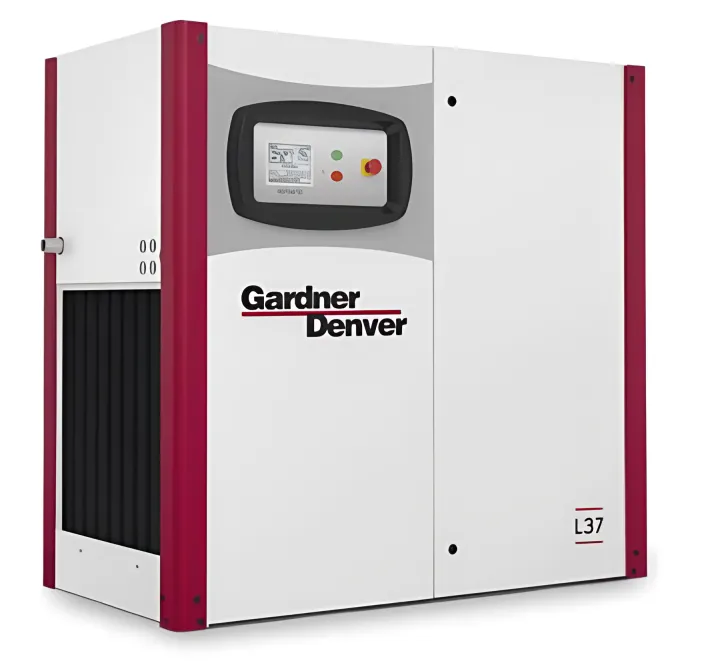
Gardner Denver's piping systems use Buna N high-nitrile O-rings as standard, with Viton available for higher-temperature applications - the same material logic applies when selecting replacement seals for regulator assemblies.
Cracked or Failed Diaphragm
The diaphragm senses downstream pressure and controls how far the main valve opens. When it cracks - due to age, excessive pressure cycling, or incompatible lubricating oil - pressurized air bypasses the valve and escapes continuously through the weep hole or around the adjustment knob, even when the set pressure hasn't changed.
Decision rule on replacement:
- Small, inexpensive regulator → replace the entire unit
- Larger industrial-grade regulator where the body is otherwise sound → diaphragm-only replacement is usually worth it
Always verify the part number in manufacturer documentation before ordering. Diaphragm sizing and material vary by model.
Debris or Contamination on Valve Seats
Foreign particles - rust from older steel piping, pipe scale, oil aerosols, or dust from unfiltered inlet air - can lodge on the main valve or relief valve seat, preventing it from fully closing.
The result is continuous air leakage through the exhaust port even at a stable set pressure. Technicians call this "creep." SMC's filter-regulator documentation identifies foreign material in valve seats and O-rings as a direct cause of regulation failure - a failure mode that's almost entirely preventable with upstream filtration.

This type of contamination is most common in:
- Systems without a downstream particulate filter
- Facilities with older steel distribution piping
- Any system recently worked on, where debris may have been introduced
Improper Installation or Loose Connections
Installation errors are a common leak source. Any of these mistakes will cause leaks at the inlet/outlet ports:
- No thread sealant applied at connections
- Fittings overtightened or undertightened
- Regulator mounted in the wrong flow direction
- Misaligned piping stressing the regulator body internally
This cause is especially common after a recent regulator swap or service visit. Both are avoidable with basic installation discipline:
- Apply thread sealant carefully, leaving the last 1–2 threads bare to prevent tape fragments from entering the valve
- Always follow manufacturer torque specifications - hand-thread fittings into the regulator body before applying a wrench to avoid cross-threading
What Happens If a Leaking Regulator Is Ignored
The compressor doesn't know a regulator is leaking - it only knows system pressure has dropped below the cut-in point. So it restarts. Again and again.
According to CAGI, a 1/8-inch leak at 100 psig running 8,760 hours per year (24/7 operation) costs approximately $3,935 annually in wasted energy. A 1/4-inch leak runs over $17,000 per year. Regulator leaks are rarely that large, but even a small continuous bleed adds meaningful cost, and that's before accounting for accelerated motor and pump wear from overcycling.
Beyond energy waste, uncontrolled downstream pressure creates operational and safety problems:
- Downstream pressure creep above the set point damages pneumatic tools and undermines precision processes
- Pressure drop from a failed diaphragm produces inconsistent tool performance and production quality problems
- In food & beverage, pharmaceutical, and medical facilities, unregulated compressed air can trigger compliance failures under 21 CFR 117.40(g), which requires air contacting food or food-contact surfaces to be properly treated

Warning Signs Your Regulator Is About to Fail
Catching these early prevents full failure and unplanned downtime:
- Downstream gauge climbs above the set point after flow stops, indicating the valve seat is no longer sealing
- Persistent air escaping from the weep hole or adjustment knob with no recent pressure change points to diaphragm or seat failure
- Pressure fluctuates at the point of use while tank pressure stays stable, meaning the regulator has lost its ability to hold set point
How to Fix a Leaking Air Compressor Pressure Regulator
Every repair starts the same way: depressurize the system completely and isolate the regulator from the air supply before any disassembly. Skipping this step creates a serious safety hazard.
Replacing Worn O-Rings and Seals
- Depressurize and isolate the regulator from the upstream supply
- Disassemble the regulator body (consult the manufacturer's service manual for your specific model)
- Remove and inspect all O-rings and seals for hardening, cracking, or flat spots
- Replace with manufacturer-specified seal material ; generic O-rings may not match the pressure rating or chemical compatibility requirements of your system
- Reassemble and leak-test using soapy water before returning to service

Use OEM replacement seal kits where available. Comp-Air Ohio stocks genuine Gardner Denver parts and can source the correct seal kit for your model - call (440) 237-6700 to confirm availability.
OEM materials matter here: AEON series compressor lubricants are formulated for compatibility with Viton, Buna N, and Teflon seals. Generic seal materials may not hold up under the same conditions.
Replacing a Cracked Diaphragm (or Full Regulator)
- Disassemble the regulator to access the diaphragm (typically located beneath the adjustment spring cap)
- Inspect visually for cracks, tears, or stiffened areas
- Apply the replacement decision: full unit replacement for small regulators; diaphragm-only for larger industrial units with an otherwise-sound body
- Verify the part number from manufacturer documentation before ordering , as sizing and material differ by model
If you're unsure whether your unit warrants diaphragm-only repair or full replacement, Comp-Air Ohio's factory-trained technicians can evaluate the regulator and recommend the most practical repair path.
Cleaning Debris from Valve Seats
- Expose the valve seat by disassembling the regulator
- Flush the seat area with compressed air or a suitable non-corrosive cleaning solution
- Inspect the seat surface for scoring or pitting
- Decision point: if the seat is visibly scored or pitted, cleaning won't fix it ; the regulator or seat assembly needs replacement
- Reassemble and install an upstream particulate filter before returning to service to prevent the same contamination from causing a repeat failure
Correcting an Improper Installation
- Shut off and depressurize the upstream supply
- Unthread the regulator carefully and inspect pipe threads and fittings for damage before reinstalling
- Apply fresh thread sealant using the last-1–2-threads-bare method
- Reinstall to manufacturer-specified torque , holding the regulator body by hand while threading in fittings to prevent stress on the housing
- Verify with soapy water - slowly repressurize and apply soapy water to all connection points; any bubbling pinpoints remaining leaks
How to Prevent Air Compressor Pressure Regulator Leaks
Repairing a regulator solves the immediate problem. Keeping it from failing again is where the real maintenance savings accumulate.
Install Upstream Filtration and Air Treatment
A properly sized particulate filter upstream of the regulator removes moisture, oil aerosols, and solid particles before they reach the valve seat and diaphragm. This is the most direct protection against contamination-related failures.
Comp-Air Ohio supplies the full ZEKS filtration line - including the FIL/GIL Series filters covering 20–21,250 CFM - along with refrigerated and desiccant dryers suited to different dewpoint requirements. Replacing a failed regulator is a natural opportunity to evaluate upstream air quality at the same time.
Follow Correct Installation and Pressure-Setting Practices
- Install in the correct flow direction (marked on the regulator body)
- Use proper thread sealant with the last 1–2 threads bare
- Torque to manufacturer specifications
- Set outlet pressure no higher than 90% of inlet pressure to avoid over-stressing the diaphragm and valve seat

Schedule Periodic Seal and Diaphragm Inspections
Don't wait for a failure. At each scheduled maintenance interval, disassemble and visually inspect O-rings, seals, and the diaphragm. Replace components proactively based on their condition and manufacturer service guidelines.
Align these inspections with the compressor's existing service schedule to avoid creating separate downtime events.
Tips for Long-Term Pressure Regulator Maintenance
- Run regular leak audits. Walk the system during low-noise periods and listen for hissing, or apply soapy water to connections. Log findings so trends surface before they become failures.
- Train your team. Operators who recognize pressure creep and persistent weep-hole hissing will catch problems early - before an unplanned shutdown.
- Consider a preventive maintenance agreement. Comp-Air Ohio provides scheduled service and 24/7 emergency support (for contract customers) across Northern Ohio - keeping compressors and regulators from failing at the worst possible time.
- Evaluate FRL upgrades. Replacing an older standalone regulator with a filter-regulator-lubricator (FRL) unit consolidates filtration, regulation, and lubrication into one assembly - fewer components to inspect separately.
Conclusion
A leaking pressure regulator always has an identifiable cause: worn seals, a failed diaphragm, contaminated valve seats, or an installation issue. None of these require guesswork to diagnose, and most repairs are well within the scope of a competent maintenance team once the root cause is confirmed.
The real cost of delaying repairs shows up elsewhere: an overcycling compressor, accelerating component wear, and system pressure bleeding out through a failing seal. Upstream filtration, scheduled seal inspections, and correct installation practices cost a fraction of what emergency repairs or early compressor replacement demand.
If your Northern Ohio facility is dealing with a regulator leak or wants to get ahead of compressor maintenance, contact Comp-Air Ohio at (440) 237-6700 - they carry genuine Gardner Denver parts and have been supporting compressed air systems in the region since 1977.
How Comp-Air Ohio Delivers for Your Plant
Comp-Air Ohio is the Gardner Denver air compressor dealer for Northeast Ohio, serving manufacturing plants, automotive shops, processing facilities, and commercial businesses from 9841 York-Theta Drive in North Royalton since 1977. Your Cleveland, Akron, and Northern Ohio facility gets local sales, service, repair, maintenance, parts, compressed air audits, and electric rentals up to 300 HP, plus all-makes repair when uptime matters.
Explore related resources on our compressors, parts, dryers, aluminum piping, lubricants, compressor controls, nitrogen generators, and used equipment pages.
Ready for next steps? Request a quote, call Cleveland at (440) 237-6700, Akron at (330) 928-3092, or toll-free at (800) 247-7978.
Frequently Asked Questions
How can I tell if an air compressor pressure regulator is bad?
The clearest indicators are downstream pressure that slowly climbs above the set point after flow stops (creep), continuous air escaping from the weep hole or adjustment knob when set pressure hasn't changed, and inconsistent tool pressure despite a stable tank reading. Any one of these points to a regulator that needs inspection.
Is some air leaking from the pressure regulator normal?
Brief bleed-off from the weep hole is normal when you reduce the set pressure, as the regulator releases excess downstream air. Continuous leaking whenever the system is pressurized, with no recent pressure adjustment, is not normal and indicates a failed diaphragm or contaminated valve seat.
Can I repair a leaking pressure regulator myself, or does it need to be replaced?
O-ring replacement and valve seat cleaning are manageable DIY tasks with the right parts and a service manual. For a cracked diaphragm, small regulators are usually worth replacing outright, while larger industrial units are better candidates for diaphragm-only replacement by a qualified technician.
What causes a pressure regulator to leak from the adjustment knob?
This typically points to a failed diaphragm or a worn stem seal around the adjustment screw. When either fails, pressurized air migrates up through the spring chamber and escapes around the knob rather than staying confined to the valve body.
How often should I replace the O-rings on a pressure regulator?
Seal life depends on operating conditions, cycle frequency, and lubricants in use, so there's no fixed calendar interval. Follow your model's service guidelines and replace O-rings proactively at each scheduled compressor service rather than waiting for visible wear.
Why does my air compressor short-cycle after the regulator starts leaking?
A leaking regulator bleeds air continuously downstream, dropping system pressure below the cut-in point and triggering repeated compressor restarts. That short-cycling accelerates motor and pump wear while driving up energy consumption until the leak is repaired.