
The problem is that many facilities treat oil-free compressors like oil-injected ones - and the maintenance needs are genuinely different. Skip the wrong service tasks, and you're not just looking at a broken machine. You're looking at failed air quality audits, production holds, and the kind of unplanned downtime that ABB's 2025 industrial survey found costs 83% of manufacturers at least $10,000 per hour.
This guide covers the key components of an oil-free screw compressor, how it operates, what makes its maintenance requirements unique, and a practical schedule for keeping it running at full performance.
Key Takeaways
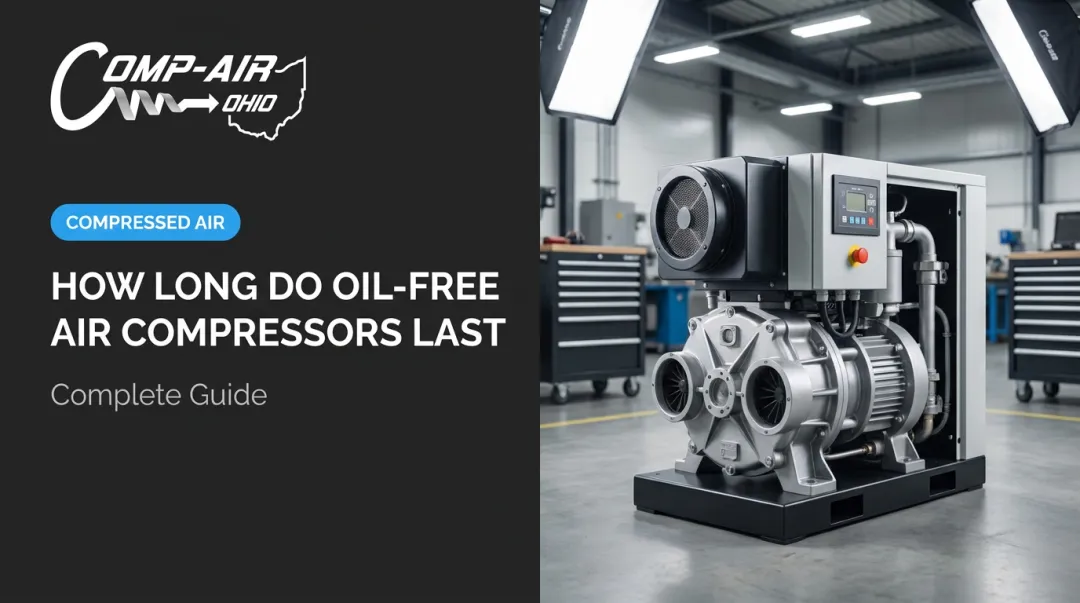
- Oil-free screw compressors use non-contact rotor technology, producing ISO Class 0 air with zero lubricant entering the compression chamber
- Core components include the inlet filter, coated screw element, timing gears, intercooler, aftercooler, and system controller
- Maintenance focuses on rotor coatings, cooling systems, and gearbox lubrication rather than oil changes
- Warning signs include reduced output pressure, rising discharge temperatures, unusual vibration, and increased energy consumption
- A structured schedule covering daily checks through annual overhauls protects air quality compliance and extends equipment life
Key Components of an Oil-Free Screw Compressor
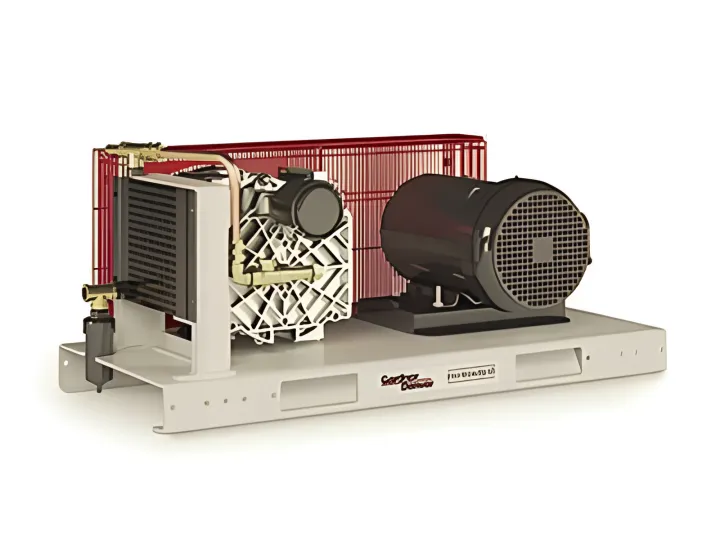
Every component in an oil-free screw compressor serves a dual purpose: maintaining compression performance while ensuring no lubricant reaches the air stream. Understanding what each part does makes maintenance decisions much clearer.
Inlet Air Filter and Suction Valve
The inlet air filter is the first line of defense. It removes dust, particulates, and moisture before air enters the compression chamber. In oil-free compressors, this filter carries more weight than in oil-injected designs - with no oil film downstream to capture contaminants that slip through, any failure here goes straight to the airend.
The suction valve controls when air is drawn into the compression chamber. It opens when system pressure drops below the minimum set point and closes when maximum pressure is reached. This is the primary control point for load/unload cycles, and its condition directly affects cycling efficiency.
Oil-Free Screw Element (Airend)
Two counter-rotating helical rotors - male and female - compress air between them without ever making contact. External timing gears keep them synchronized, eliminating the need for lubrication inside the compression chamber entirely.

- maintaining near isothermal compression (meaning heat generated during compression is continuously removed, keeping temperatures stable) and a consistent low discharge temperature regardless of ambient conditions.
Gearbox, Bearings, and Seals
A common misconception: "oil-free" refers only to the compression chamber. In most oil-free screw compressors, the gearbox and bearings that drive the rotors are lubricated with oil (drive oil), completely separate from the compressed air path.
Shaft seals prevent gearbox oil from migrating into the compression chamber. When these seals degrade, oil traces can appear downstream - and that's a compliance failure. Seal integrity is a non-negotiable maintenance focus.
Note: Some EnviroAire models (VS Series and scroll-based S/ES Series) use direct-drive or water-injected designs with no gearbox, eliminating this concern entirely.
Discharge Valve, Check Valve, and System Controller
- Discharge valve - releases compressed air once minimum pressure is achieved; wear causes pressure loss and inefficient unloading
- Check valve (non-return valve) - prevents backflow when the compressor unloads or stops; failure allows backflow that can damage the airend on restart
- System controller - monitors operating parameters, automates load/unload cycles, and triggers alerts for abnormal conditions
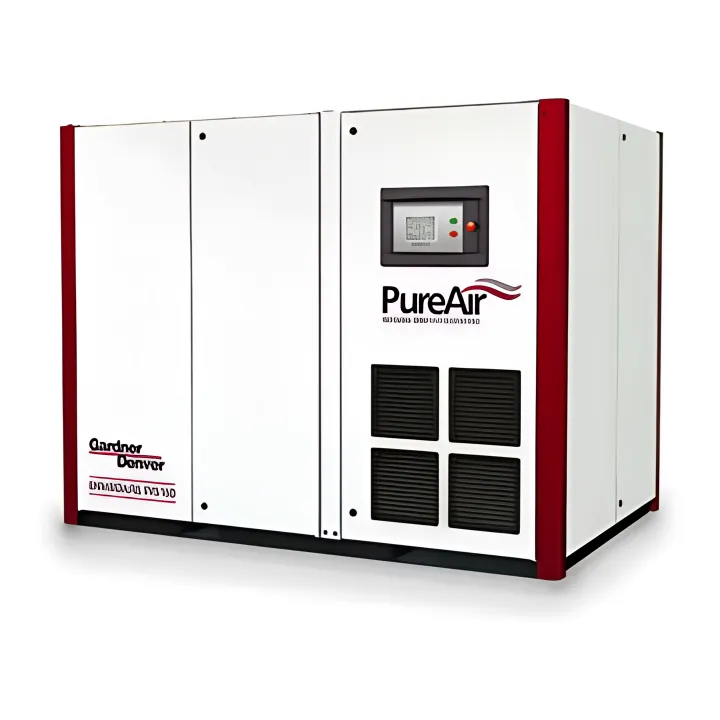
Gardner Denver's Governor touchscreen controller logs data including on-load hours, temperature history, and fault codes - all accessible remotely through iConn before a service visit is needed. The integrated iConn system flags anomalies early, giving maintenance teams time to respond before a minor issue becomes a failure.
How an Oil-Free Screw Compressor Operates
The two-stage compression cycle works as follows:
- Air intake - enters through the inlet filter and suction valve
- First-stage compression - the first screw element compresses air
- Intercooling - an intercooler removes heat before the second stage
- Second-stage compression - air is compressed to final operating pressure
- Aftercooling and moisture separation - discharge temperature drops; condensate is removed
- Output - clean, dry, oil-free compressed air exits the system

Throughout this cycle, external timing gears keep the rotors synchronized without contact - which is the mechanical reason the air stays oil-free.
Most industrial oil-free screw compressors include either variable speed drives (VSD) or load/unload control systems. The Gardner Denver EnviroAire TVS Series uses VSD to match output precisely to demand, reducing energy waste during low-demand periods. From a maintenance standpoint, both continuous over-running and frequent short-cycling accelerate component wear - so matching the control system to actual demand patterns directly affects service intervals.
That said, oil-free doesn't mean maintenance-free. There is no oil separator vessel in the compression path, but the cooling circuits, shaft seals, and gearbox lubrication (where applicable) still require active management.
What Makes Oil-Free Screw Compressor Maintenance Unique
Maintenance Shifts, Not Simplifies
The absence of compression-chamber oil eliminates tasks like oil changes and oil separator replacements. The trade-off is that attention moves to different systems entirely:
- Rotor coating integrity - degradation causes internal air leakage and efficiency loss
- Cooling system performance - fouled coolers raise discharge temperatures and accelerate coating wear
- Gearbox oil management - on models with gearboxes, this oil requires periodic sampling and replacement
- Shaft seal condition - the only barrier between gearbox oil and the compressed air stream
The Compliance Dimension
For facilities operating under NFPA 99 medical air standards or ISO 8573-1 Class 0 certification, a maintenance lapse isn't just an equipment problem - it's a regulatory one. Documented maintenance records become audit evidence. Comp-Air Ohio's service programs are structured specifically for these regulated environments - OEM-trained technicians, documented service records, and Gardner Denver parts that keep certification requirements intact.
The Cost of Degraded Rotor Coatings
industry guidance data shows that the energy consumption difference between a reconditioned oil-free screw element and a new one can be as much as 20%. Since compressed air systems already account for 10% to 30% of plant electricity use, that coating degradation adds up fast across a full operating year. Gardner Denver addresses this directly with GD RotorArmor - designed to maintain consistent performance without the performance drop that softer PTFE-graphite coatings exhibit.

Essential Maintenance Tasks for Oil-Free Screw Compressors
These tasks apply across all oil-free screw compressor models. Adjust intervals based on your operating environment and OEM specifications.
Inlet Air Filter Maintenance
Inspect filters more frequently than in oil-injected units - contamination passes directly through to compression with no oil barrier downstream. Key checks:
- Visual inspection for clogging, tears, or collapse
- Pressure differential monitoring (high differential = restricted flow)
- Replacement when differential reaches OEM threshold or per scheduled interval
Dusty intake environments shorten filter life significantly. A clogged filter creates pressure drop that increases energy consumption - CAGI data shows every 1 psi of pressure loss adds approximately 0.5% to electricity consumption.
Cooling System Inspection
Fouled intercoolers and aftercoolers are a leading cause of thermal shutdowns. Inspect regularly for:
- Fin blockage on air-cooled units from dust, debris, or oil mist
- Scale buildup in water-cooled unit tubes and reduced coolant flow rate
- Elevated discharge temperature (an early warning sign before shutdown)
Reduced cooling efficiency accelerates rotor coating degradation. On EnviroAire T/TVS models with closed-loop water cooling, the coolant circuit itself requires periodic inspection and fluid maintenance.
Gearbox Oil and Shaft Seal Inspection
On compressor models that use a gearbox, the drive oil requires:
- Periodic oil sampling to check for contamination or degradation
- Replacement per OEM interval (Gardner Denver recommends up to 8,000-hour intervals under clean conditions; oil sampling lab analysis confirms when a change is needed)
- Shaft seal inspection for oil migration signs: oil traces near rotor housing or unexpected oil detected downstream
Any oil found downstream of the compressor on an oil-free unit is a seal failure - address it immediately.
Discharge Valve and Check Valve Inspection
- Check for wear, seat damage, or improper seating
- A worn discharge valve causes pressure loss and inefficient unloading cycles
- A failed check valve allows backflow on restart, which can damage the airend
These are low-cost components. Replacing them on schedule is far cheaper than airend damage.
System Controller and Safety Sensor Checks
Verify that temperature sensors, pressure transducers, and safety shutdown setpoints are calibrated and functioning. A miscalibrated controller can mask developing problems, reporting normal readings while actual conditions have drifted out of range.
The Governor controller on Gardner Denver EnviroAire compressors logs operational data that Comp-Air Ohio technicians retrieve and review during service visits. That data history turns routine service calls into proactive trend analysis, catching drift before it becomes a shutdown.
Signs Your Oil-Free Screw Compressor Needs Maintenance
Catch these early - they all get worse fast if ignored.
Performance indicators:
- Drop in output pressure or flow rate despite normal motor operation
- Compressor running continuously without reaching set pressure
- Longer cycle times to reach operating pressure
- Unexplained increase in energy consumption for the same workload
Operational and sensory signs:
- Elevated discharge temperature readings above normal operating range
- Unusual vibration or bearing noise
- Oil traces detected downstream of the compressor (seal failure)
- Controller fault codes or alarm activations
Pattern-based indicators:
- Frequent unscheduled shutdowns
- Repeated thermal protection triggering
- Alarms that reset but recur within a short period

In oil-free compressors, rising energy consumption combined with reduced output almost always points to rotor coating degradation or cooling system issues. Both worsen over time, and catching either early is far cheaper than emergency repair or airend replacement.
Oil-Free Screw Compressor Maintenance Schedule
Maintenance intervals depend on operating hours, environmental conditions, and duty cycle. A compressor running in a clean, temperature-controlled pharmaceutical plant has different needs than one running in a dusty food processing environment. The table below outlines recommended tasks by service interval:
| Frequency | Tasks |
|---|---|
| Daily / Per-Shift | Check controller display for fault codes or alarms; verify discharge pressure and temperature are within normal range; listen for abnormal noise or vibration; check for visible leaks |
| Weekly / Monthly | Inspect and clean inlet air filter; check cooling fins (air-cooled) or coolant flow (water-cooled) for fouling; verify gearbox oil level where applicable; test load/unload cycling behavior |
| Quarterly / Semi-Annual | Replace air inlet filter element; inspect intercooler and aftercooler for scale or fin fouling; inspect discharge and check valves; check shaft seals for oil migration; verify controller sensor calibration |
| Annual / Major Service | Full gearbox oil change per OEM schedule; bearing inspection and replacement as required; rotor coating inspection (element replacement if degradation is detected); full system pressure test; calibration of all safety sensors and shutdowns |
Low-duty-cycle operations (around 2,000 hours/year) can generally follow calendar-based intervals. High-duty-cycle operations (8,000+ hours/year) should follow operating-hour-based intervals per OEM recommendations, as calendar intervals alone won't keep pace with actual wear.
For Northern Ohio facilities in regulated industries, Comp-Air Ohio's OEM-trained technicians can build a customized preventive maintenance plan using Gardner Denver parts and generate the service documentation that supports ISO 8573-1 compliance audits.
Conclusion
An oil-free screw compressor is precision equipment. Its ability to deliver Class 0 air depends on every component performing to specification - and that's only achievable through consistent, structured maintenance.
Long-term performance comes down to three things: component knowledge, understanding how those components interact under load, and a proactive maintenance schedule that catches problems before they develop.
Skipping that maintenance doesn't save money - it shifts costs downstream. Common consequences include:
- Degraded air quality that fails compliance audits
- Higher energy bills from inefficient compression
- Unplanned downtime that typically costs far more than any scheduled service visit
Treat maintenance as part of operating the equipment, not an optional expense.
How Comp-Air Ohio Delivers for Your Plant
Comp-Air Ohio is the Gardner Denver air compressor dealer for Northeast Ohio, serving manufacturing plants, automotive shops, processing facilities, and commercial businesses from 9841 York-Theta Drive in North Royalton since 1977. The sales program covers Gardner Denver and CompAir oil-free and lubricated rotary screw compressors, Hydrovane rotary vane units, Zeks dryers and Generon nitrogen generators, plus aftermarket parts, lubricants and filtration supplies. Your Cleveland, Akron, and Northern Ohio facility gets local sales, service, repair, maintenance, parts, compressed air audits, and electric rentals up to 300 HP, plus all-makes repair when uptime matters.
Explore related resources on our compressors, parts, dryers, aluminum piping, lubricants, compressor controls, nitrogen generators, and used equipment pages.
Ready for next steps? Request a quote, call Cleveland at (440) 237-6700, Akron at (330) 928-3092, or toll-free at (800) 247-7978.
Frequently Asked Questions
What is the function of the oil stop valve in a screw compressor?
The oil stop valve controls lubricating oil flow into the drive components. It opens when the compressor runs to allow lubrication of the gearbox and bearings, then closes on shutdown to prevent oil from flooding the machine head. In oil-free compressors, this valve is part of the gearbox/bearing lubrication circuit - it never contacts the compressed air stream.
What is the purpose of using oil in an oil-free screw compressor?
The "oil-free" designation applies only to the compression chamber. The gearbox, timing gears, and bearings that drive the rotors still require lubrication. Shaft seals isolate this lubrication circuit from the compression cavity, ensuring oil never contacts the air being compressed.
How is compression heat removed in an oil-free rotary screw compressor?
Without injected oil to absorb heat, oil-free compressors rely on dedicated intercoolers between compression stages and an aftercooler at the discharge. These are either air-cooled or water-cooled depending on installation. Both configurations are critical: higher discharge temperatures accelerate rotor coating degradation over time.
What is the function of the intake valve on a screw compressor?
The intake valve controls air admission into the compression chamber. It opens fully when system pressure drops below the minimum set point (loading) and closes when maximum pressure is reached (unloading). This regulates the compression cycle and protects against over-pressurization.
How often should an oil-free screw compressor be serviced?
A general baseline includes daily operational checks, monthly filter inspections, quarterly component reviews, and annual overhauls. High-duty-cycle or contaminated-environment applications require tighter intervals per your OEM's specifications.
What is the difference between Class 0 oil-free and technically oil-free air?
ISO 8573-1 Class 0 guarantees zero detectable oil from a true oil-free compressor - no oil ever enters the compression process. "Technically oil-free" describes oil-injected compressors fitted with downstream filtration, which reduces but doesn't eliminate contamination risk, particularly as filters age or operating temperatures rise.