
The frustrating part is that most of these failures are preventable. But preventing them requires understanding that there is no single universal oil change interval. The right timing depends on your compressor type, how hard you run it, your shop environment, and what the oil itself is telling you.
This article covers all of it - interval guidelines by compressor type, observable warning signs, timing mistakes to avoid, and how to build a schedule that holds up in real Northern Ohio industrial conditions.
Key Takeaways
- Reciprocating compressors typically need oil changes every 100–500 hours or every 3–12 months
- Rotary screw compressors can run 2,000–8,000 hours between changes based on oil chemistry
- Dark, milky, or debris-laden oil is an immediate change trigger - no need to wait for the schedule
- Always depressurize and allow a full cooldown before changing oil - partial drains contaminate the fresh fill
- OEM-specified lubricants are required to protect equipment performance and maintain warranty coverage
Why Oil Change Timing Matters
Compressor oil does three jobs simultaneously: it lubricates moving parts, absorbs heat from compression, and seals clearances inside the airend or cylinder. When it degrades, it fails all three functions at once.
The mechanism is oxidation. Heat and moisture break down the oil's molecular structure over time, reducing viscosity and allowing varnish to build up on internal surfaces. Compressed Air Best Practices identifies varnish as a leading cause of airend failure - with plugged filters and rising discharge temperatures as the earliest warning signs.
CAGI notes that proper compressor maintenance cuts energy costs by roughly 1% - and prevents unscheduled breakdowns that cost far more than any planned service visit.
Beyond operating costs, oil timing directly affects air quality. In food processing, pharmaceutical, and medical facilities, degraded oil raises the risk of carryover into the air stream - putting product quality and ISO 8573-1 oil class compliance at risk.
Those downstream consequences make interval discipline non-negotiable. The three core risks of delayed oil changes are:
- Varnish buildup on airend surfaces, accelerating wear and restricting airflow
- Elevated discharge temperatures as heat transfer efficiency drops
- Contaminated air output that can trigger regulatory or quality failures
When to Change Air Compressor Oil Based on Your Situation
The operator manual is always the baseline. What follows are practical guidelines, but they never override the manufacturer's specifications for your specific unit.
Based on Compressor Type
Reciprocating (piston) compressors experience more direct oil exposure to heat cycling and require more frequent service. General OEM guidance puts the interval at 100-200 hours or every few months. A common industrial baseline is 3 months or 500 hours for petroleum oil, and 12 months or 2,000 hours for approved synthetic lubricant - always confirm against your compressor manual.
For Gardner Denver reciprocating units, the AEON lubricant lineup covers both cases:
- AEON 500 (petroleum-based) - interval per individual service manual
- AEON AC SY (full synthetic) - 4,000-hour service intervals
- AEON AC FG (food-grade synthetic) - 4,000-hour service intervals
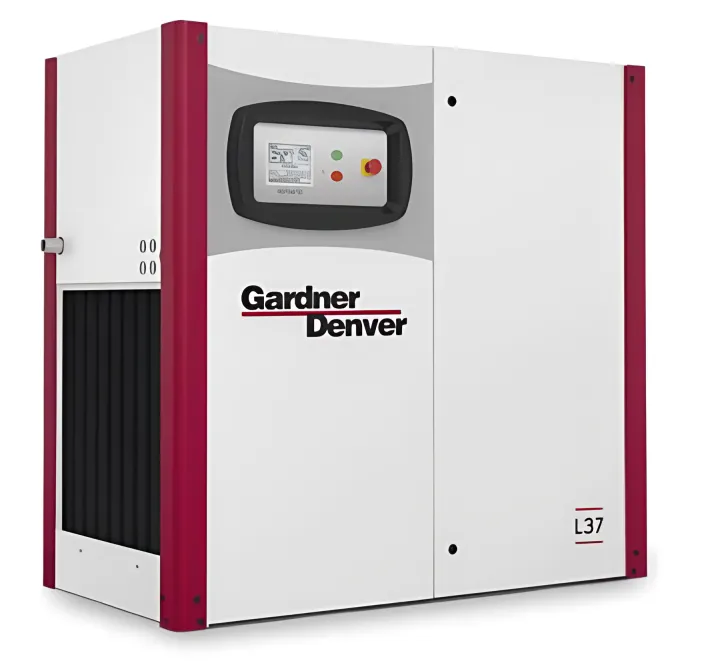
Rotary screw compressors allow much longer intervals because the oil circulates in a closed loop at more controlled temperatures. Gardner Denver's AEON series breaks down clearly:
| Lubricant | Type | Service Interval |
|---|---|---|
| AEON 800 / AEON 2000 | Petroleum-based | 2,000 hours |
| AEON 4000 | Semi-synthetic | 4,000 hours |
| AEON 9000SP / 9000TH / BIO | Full synthetic | 8,000 hours |

These intervals assume clean ambient conditions, proper filter and separator changes, and normal operating temperatures. In harsh environments, shorten them.
Oil-free compressors don't have a sump to service - but that doesn't make them maintenance-free. Gardner Denver's EnviroAire series uses a direct-drive design with sealed, maintenance-free bearings that eliminate gearbox oil entirely. Other oil-free designs still require separate gearbox and bearing lubricant maintenance on their own schedules - don't apply rotary screw sump intervals to these machines.
Based on Operating Hours and Duty Cycle
A compressor running at continuous full load degrades oil faster than one cycling on and off. Heat drives oxidation, and more hours under load means more accumulated heat exposure.
For heavy daily use, target the lower end of the manufacturer's recommended range. For near-continuous operation, tie service to run hours rather than the calendar alone.
Two tools make this practical:
- Gardner Denver's Governor™ controller logs both on-load and total hours, giving maintenance teams the actual runtime data to set intervals
- iConn remote monitoring lets managers track that data without physically checking the unit
The most accurate approach is oil analysis: measuring viscosity, Total Acid Number (TAN), water content, and wear metals. Use the manufacturer's intervals to set your sampling schedule, then let the lab results confirm or shorten the next change window.
Based on Environmental and Operating Conditions
Northern Ohio facilities deal with conditions that can significantly shorten standard intervals:
- High humidity (common in summer): Moisture accelerates oil oxidation and causes emulsification
- Dusty environments (machining, woodworking, sandblasting): Contaminated intake air reaches the oil sump faster than the filter schedule assumes
- Hot compressor rooms: Elevated ambient temperatures push oil toward its oxidation threshold sooner
- Cold winter startups: Thickened oil at startup increases component wear before the oil reaches operating viscosity - one strong argument for synthetic lubricants in shops with wide seasonal temperature swings
industry practice recommends shortening standard 2,000-hour rotary screw intervals to 1,000 hours in harsh environments. Treat dusty machine shops, humid food plants, and cold-start equipment as severe service, and adjust accordingly.

Signs It's the Right Time to Change Your Air Compressor Oil
Don't wait for a scheduled date if the oil is already showing problems. Check the sight glass or dipstick - the table below covers what each visual cue actually means.
Visual Indicators
| What You See | What It Means | Action |
|---|---|---|
| Dark brown or black oil | Oxidation, additive depletion | Change immediately |
| Milky or cloudy appearance | Water contamination | Change and inspect for moisture source |
| Metallic debris or sludge in drained oil | Internal wear | Change oil and investigate the wear source |
| Oil level consistently low | Carryover or seal issue | Change and check separator/seals |
Color alone isn't definitive - additive-depleted oil can still look amber. Use visual checks to flag problems; oil analysis confirms whether a change is actually needed.
Performance-Based Indicators
Watch for these during normal operation:
- Higher-than-normal discharge temperature or operating temperature
- Unusual mechanical noise (knocking, increased vibration)
- Controller warning alerts on the Governor™ display
- Unexpected filter plugging between scheduled changes

Time-Based Intervals
Even when oil looks clean and the compressor runs normally, stick to your scheduled intervals. Oxidation and additive depletion don't always show up visually. Calendar- and hour-based scheduling is your fallback when condition indicators give no warning.
When Not to Change Your Compressor Oil
Timing mistakes during the oil change itself cause as much harm as skipping changes. Here are four common errors to avoid:
Don't change oil while the system is pressurized. Depressurize completely before opening any drain. Hot oil under pressure is a burn hazard - and rushed draining under residual pressure leaves degraded residue that contaminates the fresh fill.
Don't change oil immediately after a high-load run. Let the compressor cool down first. That said, a brief warmup before draining helps - slightly warm oil flows more completely than cold, viscous oil, ensuring a full drain.
Don't skip a change because the oil "looks fine." Contaminated or additive-depleted oil doesn't always appear dark. Track hours and run periodic oil analysis to avoid false confidence from visual checks alone.
Don't overfill. Excess oil foams under compression, reduces lubrication efficiency, and can enter the compressed air stream - damaging downstream equipment and compromising air quality.
Best Practices for Scheduling Air Compressor Oil Changes
Build a Maintenance Log
Track these data points for every unit:
- Operating hours at each oil change
- Oil change dates
- Oil analysis results (viscosity, TAN, water content, wear metals)
- Any abnormal observations during draining (color, debris, odor)
A consistent log builds a service history that lets you spot trends - a compressor that needs oil changes closer together than spec may have a developing problem worth investigating.
Align Changes with Production Downtime
Schedule oil changes during planned downtime windows, not in reaction to a breakdown trigger. For Northern Ohio manufacturing and packaging facilities running continuous shifts, even a brief planned service window is far less disruptive than an emergency shutdown.
Use OEM-Specified Lubricants
For Gardner Denver compressors, using approved AEON lubricants is both a performance requirement and a warranty condition. Gardner Denver's Platinum 10-Year Extended Warranty requires on-schedule maintenance per the operations manual, and equipment ships factory-filled with AEON lubricant. Substituting non-approved oils risks that warranty coverage and introduces an additive package that wasn't engineered for these machines.
Comp-Air Ohio stocks the complete AEON lubricant lineup - AEON 800 and AEON 2000 for standard petroleum-interval applications, AEON 9000SP and 9000TH full synthetics for 8,000-hour service - in package sizes from 12-quart cases to 55-gallon drums.
Gardner Denver also offers a free oil analysis program for several AEON synthetic products. Use it to confirm that extended intervals are appropriate for your specific operating conditions.
Follow the Proper Oil Change Procedure
- Run briefly to warm the oil slightly and improve drainage - but not a full high-load run
- Depressurize completely before opening any drain or service point
- Drain fully - do not top off over old oil; mix-ins dilute additive packages
- Inspect the drain plug O-ring and replace if compressed or damaged
- Refill to the correct level using the sight glass - not above the max mark
- Run briefly after filling to circulate, then recheck the level before returning to service

Conclusion
There is no universal oil change interval for air compressors. Compressor type, lubricant chemistry, operating hours, duty cycle, and environmental conditions all shape what the right schedule looks like for your specific unit.
Proactive, scheduled changes aligned with manufacturer guidance and real operating data protect uptime, extend service life, and prevent emergency repairs that cost far more than a scheduled oil change ever would. Start with the manual as your baseline and the sight glass as your early-warning system. When you want the most accurate picture of oil condition, oil analysis gives you the data to stop guessing and start deciding.
How Comp-Air Ohio Delivers for Your Plant
Comp-Air Ohio is the Gardner Denver air compressor dealer for Northeast Ohio, serving manufacturing plants, automotive shops, processing facilities, and commercial businesses from 9841 York-Theta Drive in North Royalton since 1977. Your Cleveland, Akron, and Northern Ohio facility gets local sales, service, repair, maintenance, parts, compressed air audits, and electric rentals up to 300 HP, plus all-makes repair when uptime matters.
Explore related resources on our compressors, parts, dryers, aluminum piping, lubricants, compressor controls, nitrogen generators, and used equipment pages.
Ready for next steps? Request a quote, call Cleveland at (440) 237-6700, Akron at (330) 928-3092, or toll-free at (800) 247-7978.
Frequently Asked Questions
How often should compressor oil be changed?
It depends on compressor type and lubricant. Reciprocating units typically need changes every 100–500 hours or every 3–12 months; rotary screw compressors with synthetic oil can run 4,000–8,000 hours between changes. Always consult the operator manual - intervals vary significantly by model and lubricant chemistry.
What are the signs that my air compressor oil needs changing?
Dark brown or black oil in the sight glass indicates oxidation; milky or cloudy oil signals water contamination. Higher-than-normal operating temperatures, unusual mechanical noise, or controller warning alerts on the Governor™ display are all immediate triggers to inspect and change.
What happens if I don't change my air compressor oil on time?
Oxidized oil loses viscosity and lubrication effectiveness, increasing friction and heat throughout the compression system. This accelerates wear on bearings, rotors, and cylinder walls, shortening component life and raising the risk of thermal shutdowns or catastrophic airend failure.
Can I use motor oil in my air compressor?
No. Automotive motor oils contain detergents that emulsify with water and accelerate carbon buildup in compressor valves and passages. Always use compressor-specific oil at the viscosity grade specified in your operator manual - typically ISO 32, ISO 46, or ISO 68 depending on the unit.
Does temperature affect how often I should change compressor oil?
Yes - high ambient temperatures and wide seasonal swings both accelerate oxidation and viscosity breakdown. Facilities with hot compressor rooms or cold winter startups should shorten standard change intervals or switch to a synthetic lubricant rated for their operating temperature range.
How long does an oil-free air compressor last?
Oil-free compressors can deliver long service life, but "oil-free" doesn't mean maintenance-free - compression element overhauls, bearing service, and filter replacements all follow model-specific schedules. Expect anywhere from 40,000 to 100,000+ operating hours on well-maintained units; duty cycle and operating pressure determine where your machine lands in that range.