
The selection challenge varies by application. Medical device assembly, semiconductor manufacturing, aerospace composite bonding, and electronics packaging each carry different air quality thresholds - but all share the same principle: compressor specifications must be matched deliberately to the plasma system's documented requirements.
This guide provides a practical framework for making that match.
Key Takeaways
- Contamination or pressure instability in compressed air directly degrades plasma treatment outcomes
- Oil-free air is non-negotiable - even trace aerosols recontaminate the treated surface
- Match three specs at the plasma system inlet: pressure (PSI), flow rate (CFM/SCFM), and ISO 8573-1 air quality class
- Dew point management, not just basic filtration, determines arc stability and treatment consistency
- Size your compressor to production cadence and duty cycle, not peak demand alone
What Is Plasma Treatment?
Plasma treatment is a surface modification process that uses ionized gas to clean, activate, or functionalize material surfaces at the molecular level. It improves adhesion, wettability, and surface energy without altering the bulk material, making it essential wherever bonding, coating, or printing outcomes depend on surface preparation.
Two configurations matter most in manufacturing:
- Atmospheric plasma treatment - operates at ambient pressure, compatible with inline production, delivers a directed plasma jet or torch. Used across automotive, electronics, and packaging lines
- Vacuum plasma treatment - operates inside an evacuated chamber, surrounds the entire part with plasma, better suited to complex geometries or tight recesses
Why Compressed Air Drives Treatment Outcomes
In atmospheric plasma systems, compressed air (or a specified gas) is the ionization medium. Tantec confirms that proper plasma discharge from the nozzle requires compressed air within a defined pressure and volume range; outside those parameters, the discharge becomes unstable or fails entirely.
Air quality determines what that plasma does to the surface. Oil aerosols or moisture in the airstream contaminate the plasma cloud, prevent uniform surface activation, and can redeposit contaminants onto the part being treated.
Research published in Physics of Plasmas confirms humidity affects discharge mode transition and alters O₃/NO₂ production in air plasma systems - a direct consequence for process consistency and output chemistry.
Industries where these effects carry direct quality and compliance consequences include:
- Semiconductor manufacturing and PCB pretreatment
- Medical device assembly and FDA-regulated packaging
- Automotive adhesion bonding and aluminum surface prep
- Aerospace composite preparation (Enercon documents lap shear strength gains over 40% with proper plasma pretreatment)
- Electronics packaging and overmolding
Each of these applications demands a compressor system matched to the plasma equipment's air quality and flow specifications - which is where selection decisions get consequential.
What to Consider When Choosing an Air Compressor for Plasma Treatment
Compressor selection for plasma treatment comes down to six factors - and they interact. A compressor that meets pressure requirements but delivers contaminated air, or adequate flow but insufficient duty cycle, will still compromise treatment quality. Each factor below maps directly to a process outcome.
Required Air Pressure (PSI)
Every plasma treatment system has a minimum inlet pressure specification. Below that threshold, the plasma discharge becomes unstable, flickers, or fails to sustain - producing non-uniform surface activation.
Verified OEM pressure ranges from primary sources:
| System | Specified Pressure | Approximate PSI |
|---|---|---|
| Tantec PlasmaTEC-X OEM | 4–8 bar | 58–116 PSI |
| Tantec PlasmaTEC-X | 5–6 bar | 73–87 PSI |
| Tantec VacuTEC | 5–6 bar | 73–87 PSI |
| Plasmatreat RD1004 | 4–6 bar | 58–87 PSI |
| Enercon Blown-arc | 6.9 bar | 100 PSI |

Pressure at the plasma system inlet is always lower than the compressor's outlet - losses across hoses, filters, fittings, and regulators add up. CAGI recommends keeping air velocity at 20 ft/s or lower to minimize turbulence-driven pressure drop in distribution piping. Set compressor outlet pressure sufficiently above the plasma system's minimum to absorb those losses - always verify against your specific OEM datasheet, not a generic range.
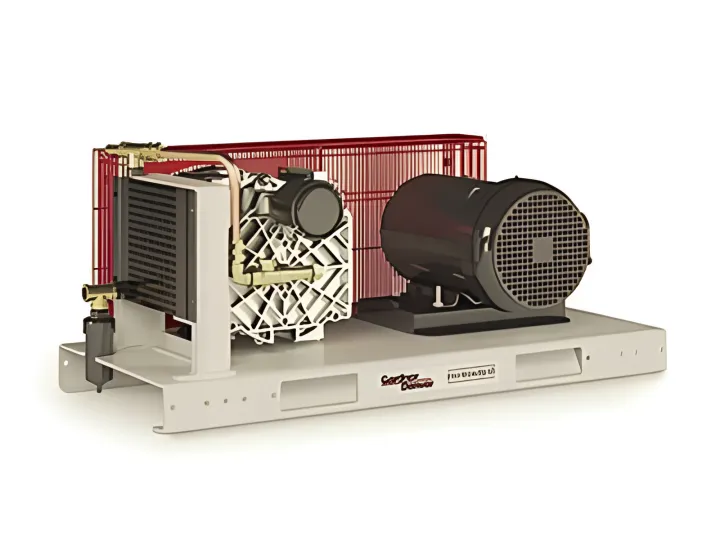
Gardner Denver's compressor lineup spans 75–220 PSIG across models, with the EnviroAire Series covering pressure ranges suited to most atmospheric plasma treatment applications.
Flow Rate Capacity (CFM)
Flow rate determines whether the compressor can sustain plasma operations at process speed without sagging pressure or interrupting discharge. Undersizing CFM is a common cause of intermittent arc failure in inline production environments.
Verified OEM flow values per treatment head:
| System | Flow per Head |
|---|---|
| Tantec PlasmaTEC-X OEM nozzle | 33 L/min (~1.17 CFM) |
| Tantec SpinTEC | 2,000 L/h (~1.18 CFM) |
| Plasmatreat RD1004 | 2 m³/h (~1.18 CFM) |
| Enercon Blown-arc | 1.5 CFM |
Individual treatment heads consume modest flow - but total system demand adds up quickly when multiple heads run simultaneously, purge/standby air is factored in, and point-of-use losses are included. Use your plasma OEM's stated consumption values combined with CAGI's storage and sizing methodology to calculate actual compressor capacity requirements.
Oil-Free Air Requirement
Even trace quantities of oil aerosol contaminate the plasma jet and redeposit hydrocarbon films on the treated surface - directly counteracting surface activation. For medical, pharmaceutical, semiconductor, and food contact applications, oil contamination is both a process failure and a compliance risk.
The OEM evidence is clear:
- Plasmatreat RD1004 specifies oil-free and water-free compressed air
- Plasmatreat electronics materials state Openair-Plasma operates with oil-free compressed air
- Tantec specifies dry and clean compressed air for PlasmaTEC-X and VacuTEC
Two paths deliver oil-free air at the plasma inlet:
- Oil-free compressor (rotary screw or reciprocating) - no downstream filtration required as a primary defense
- Lubricated compressor with multi-stage filtration - coalescing filter plus activated carbon filter; viable if properly maintained, but filter replacement schedules must hold
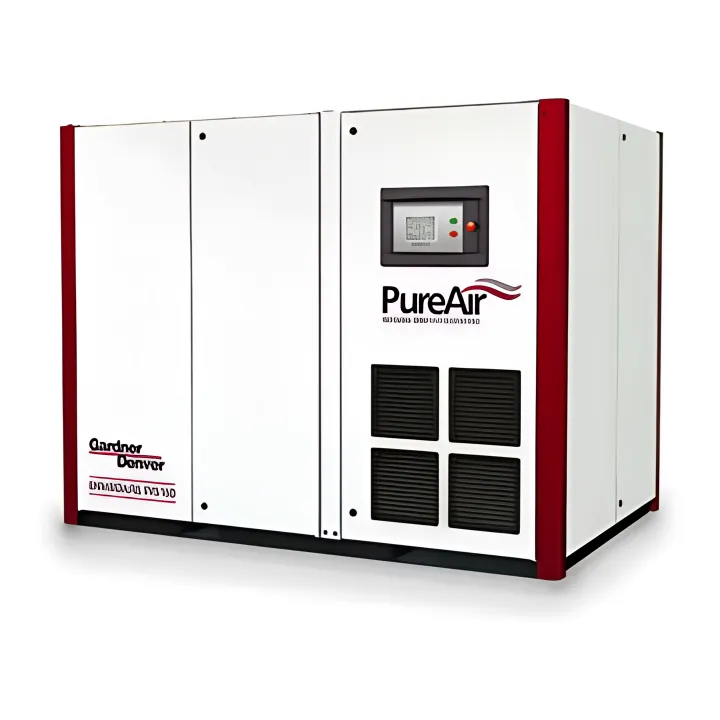
Gardner Denver's EnviroAire Series oil-free rotary screw compressors are certified to ISO 8573-1 Class 0 for oil content - independently tested and verified, covering aerosol, liquid, and vapor forms. The EnviroAire T & TVS Series is also 100% silicone-free, which matters in automotive and electronics environments where silicone contamination causes its own set of surface defect problems.
ISO 8573-1 Class 0 does not mean zero contamination as an absolute physical guarantee - it means air quality more stringent than Class 1 has been specified and verified. Specify the required oil class at the plasma system inlet and confirm it through the full treatment train.
Comp-Air Ohio also carries ZEKS HDF Mist Eliminators and ZFF Flanged Filters with Grade A activated carbon elements for facilities using lubricated compressors with a properly configured filtration train.
Moisture Control and Dew Point
Moisture in compressed air causes arc instability during plasma treatment, creates inconsistent surface energy results across treated parts, and can introduce hydroxyl contamination on the treated surface. The effect is amplified in high-humidity summer production runs.
The moisture control hierarchy:
- Coalescing filter with auto drain - minimum baseline, not sufficient for production environments
- Refrigerated dryer - appropriate for most industrial plasma treatment applications; achieves pressure dew points around +3°C (~37°F)
- Desiccant dryer - required for medical, semiconductor, and aerospace applications; achieves –40°C (–40°F) or lower

ISO 8573-1 water vapor dew point classes for reference:
| Class | Dew Point |
|---|---|
| Class 1 | ≤ –70°C |
| Class 2 | ≤ –40°C |
| Class 3 | ≤ –20°C |
| Class 4 | ≤ +3°C |
Comp-Air Ohio supplies both ZEKS and Gardner Denver desiccant dryers capable of –40°F to –100°F dew points. The ZEKS ZPB and ZPA heatless series cover 90–5,000 SCFM at standard –40°F, with optional –100°F configurations for the most demanding applications.
Duty Cycle and Compressor Type
Duty cycle - the percentage of time a compressor can run continuously - must match your production cadence.
- Continuous inline treatment (web processing, high-speed production lines): requires 100% duty cycle. Gardner Denver EnviroAire rotary screw compressors are rated for 100% continuous duty, engineered for 24/7 operation
- Batch or laboratory treatment: may be adequately served by a reciprocating compressor with a correctly sized receiver tank
Receiver (tank) sizing matters regardless of compressor type. Undersized receivers force short-cycling, increase mechanical wear, and cause pressure fluctuations that disrupt plasma discharge stability. For intermittent operations, CAGI recommends calculating air usage during the demand interval and sizing dedicated storage accordingly.
Rotary screw vs. reciprocating:
- Rotary screw - continuous, pulsation-free airflow; preferred for inline plasma treatment systems. Oil-free rotary screw compressors combine high duty cycle, smooth output, and inherent air purity
- Reciprocating (piston) - appropriate for lower-demand, intermittent operations; introduces pressure pulsation that can cause variation in plasma discharge if not adequately dampened downstream
For critical plasma treatment applications, oil-free rotary screw compressors eliminate reliance on filtration as the sole oil barrier - the most defensible configuration.
How Comp-Air Ohio Can Help
Getting compressed air right for plasma treatment means more than buying a compressor - it means matching every component to your process requirements. Comp-Air Ohio has served as the authorized Gardner Denver distributor for Northern Ohio since 1977, with engineers who spec and support complete compressed air systems for contamination-sensitive manufacturing environments.
For plasma treatment applications specifically, the relevant capabilities include:
- EnviroAire Series oil-free rotary screw compressors, ISO 8573-1 Class 0 certified for medical, semiconductor, aerospace, and electronics environments
- ZEKS and Gardner Denver refrigerated and desiccant dryers matched to your required dew point class, including –40°F to –100°F options
- Multi-stage filtration (ZEKS HDF Mist Eliminators, ZFF Flanged Filters, activated carbon finishing) for facilities running lubricated compressors
- Quick-Lock and Big-Lock aluminum piping systems with marine-grade construction and a lifetime leak-free guarantee
- Gardner Denver iConn remote monitoring for real-time pressure trends, maintenance alerts, and early detection of air quality issues
- Oil-free Class 0 rental compressors up to 300 HP for validation periods or temporary production scale-up
- 24/7 emergency service for contract customers, plus a Platinum 10-Year Extended Warranty with 5-year major component coverage

If you're unsure whether your current system meets your plasma treatment equipment's air quality requirements, Comp-Air Ohio engineers can audit your infrastructure - identifying pressure drop, moisture risk, and filtration gaps - and spec upgrades against your plasma system's exact specifications.
Conclusion
When compressor specifications don't align with plasma system requirements, surface activation fails - and the downstream bonding, coating, or printing process pays the price. Output quality, pressure stability, moisture content, and oil-free compliance all feed directly into whether the plasma treatment delivers consistent results.
The right compressor is one whose documented specifications match the plasma system's actual requirements across every key parameter:
- Pressure (PSI) matched to the system's minimum operating threshold
- Flow rate (CFM) sized for peak demand, not average load
- ISO 8573-1 air quality class meeting the contamination limits the system requires
- Dew point kept below the level where moisture affects treatment consistency
- Duty cycle appropriate for continuous or batch production
Verify each of these against OEM datasheets - not general industry benchmarks.
Audit compressor performance periodically. Changes in production throughput, treatment system capacity, or facility conditions shift requirements over time - a setup that was correctly specified two years ago may no longer be adequate today. Comp-Air Ohio's factory-trained technicians serve Northern Ohio facilities with ongoing system assessments, maintenance contracts, and emergency support to keep compressed air systems aligned with current process demands.
How Comp-Air Ohio Delivers for Your Plant
Comp-Air Ohio is the Gardner Denver air compressor dealer for Northeast Ohio, serving manufacturing plants, automotive shops, processing facilities, and commercial businesses from 9841 York-Theta Drive in North Royalton since 1977. Your Cleveland, Akron, and Northern Ohio facility gets local sales, service, repair, maintenance, parts, compressed air audits, and electric rentals up to 300 HP, plus all-makes repair when uptime matters.
Explore related resources on our compressors, parts, dryers, aluminum piping, lubricants, compressor controls, nitrogen generators, and used equipment pages.
Ready for next steps? Request a quote, call Cleveland at (440) 237-6700, Akron at (330) 928-3092, or toll-free at (800) 247-7978.
Frequently Asked Questions
What PSI and CFM does a plasma treatment air compressor typically need to deliver?
Pressure and flow requirements vary by plasma system model. Verified OEM inlet pressures range from 4–8 bar (approximately 58–116 PSI), and per-head flow values typically cluster around 1.2–1.5 CFM. Total system demand depends on simultaneous heads, standby purge air, and line losses - always calculate from OEM consumption data rather than a generic rule.
Why is oil-free compressed air essential for plasma surface treatment?
Oil aerosols in the compressed air stream contaminate the plasma jet and redeposit hydrocarbon films on the treated surface, directly opposing surface activation. For medical, semiconductor, and food contact applications, oil contamination is also a compliance failure, not just a process defect.
What is ISO 8573-1 and why does it matter for plasma treatment applications?
ISO 8573-1 is the international standard classifying compressed air quality by particulate content, moisture (dew point), and oil content at the point of use. Plasma treatment manufacturers typically specify a required air quality class, with Class 0 or Class 1 oil content being the common requirement for contamination-sensitive applications.
Can a lubricated compressor be used for plasma treatment if filtration is installed?
Yes, with a properly maintained multi-stage filtration system (coalescing plus activated carbon). The risk is that if filter replacement schedules slip or elements are not changed on time, oil breakthrough can occur. Oil-free compressors eliminate this single point of failure for critical applications.
How does moisture in the compressed air affect plasma treatment quality?
Moisture causes arc instability in the plasma discharge, produces inconsistent surface energy results across treated parts, and can introduce surface contamination that compromises bonding strength and coating adhesion in downstream operations.
What type of air dryer is recommended for plasma treatment systems?
Refrigerated dryers suit most industrial plasma treatment applications, achieving pressure dew points around +3°C (37°F). Desiccant dryers are recommended for medical, semiconductor, and aerospace applications requiring –40°F or lower - verify the specific dew point class against your plasma system manufacturer's requirements.